
Right-lower-quadrant pain that worsens with fever, vomiting or abdominal tenderness needs medical assessment rather than a routine appointment. You will learn how doctors confirm appendicitis, what laparoscopic appendix removal involves from admission through discharge, when open surgery or drainage is safer, and what to check before choosing care.
Key takeaways
- Seek same-day assessment for worsening right-lower abdominal pain.
- Expect examination, blood tests and imaging before an appendix operation.
- Open surgery, antibiotics or drainage may be safer for complicated appendicitis.
- Confirm pathology reporting, discharge instructions and follow-up before leaving.
When appendix pain needs urgent assessment and testing
Worsening pain that moves to or stays in the right lower abdomen needs same-day assessment, especially with fever, repeated vomiting, a rigid abdomen, faintness, inability to drink, or increasing abdominal swelling. Severe pain, collapse, confusion or breathing difficulty requires emergency care.
Searching “what does laparoscopy include appendix treatment shivajinagar deccan” should not delay evaluation; appendix treatment shivajinagar is a prompt clinical decision when red flags appear, not a routine online booking.
A clinician examines tenderness, guarding, rigidity and pain with movement. Tests commonly include a complete blood count, inflammatory markers such as C-reactive protein, urinalysis for urinary infection or blood, and a pregnancy test when relevant.
Ultrasound and CT answer different questions:
| Option | What it shows | Why it is used |
|---|---|---|
| Ultrasound | An enlarged appendix, fluid or another pelvic cause | Avoids radiation and is useful in children and pregnancy |
| CT abdomen and pelvis | Inflamed appendix, appendicolith, perforation or an abscess/collection | Gives detailed views when examination or ultrasound is unclear |
Pain alone does not establish appendicitis. Urinary infection, kidney stones, gastroenteritis, ovarian conditions, ectopic pregnancy and other abdominal problems can produce similar symptoms, so testing guides the treatment plan.
What happens during laparoscopic appendicectomy, from admission to discharge
Admission starts with a surgical review, confirmation of the diagnosis and discussion of alternatives. Tell the team about allergies, previous anaesthetic problems, pregnancy, and every medicine or supplement you take. Do not stop anticoagulants or diabetes medicines unless instructed. The anaesthetist explains general anaesthesia, reviews your health and gives fasting instructions.
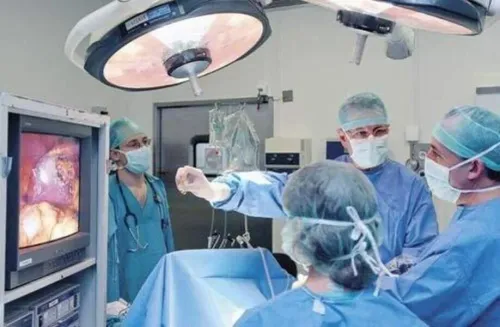
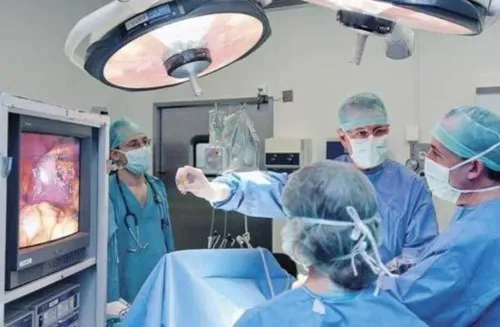
1. After consent, you receive general anaesthesia and monitoring. The surgeon inflates the abdomen with carbon dioxide to create working space.
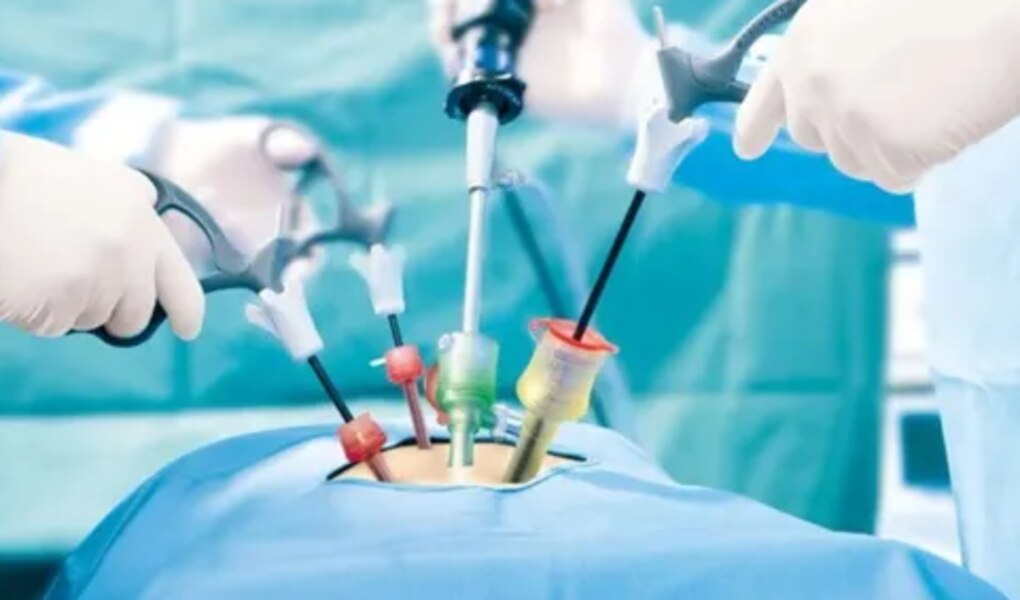
2. Usually, three small incisions are made: a camera port at or near the umbilicus and two working ports. Extra access or a larger incision is added if safe operating requires it.
3. The camera guides inspection of the abdomen. The surgeon identifies the appendix, divides its mesentery, then seals or staples the appendix base.
4. The appendix goes into a retrieval bag and leaves through a port. The surgeon checks for bleeding, leakage and contamination before closing. The specimen normally goes to histopathology.
5. If pus, perforation or a collection is present, the team may irrigate the area or place a drain. Technique varies, so confirm the planned approach with the operating surgeon when arranging laparoscopic surgery in Pune.
6. Port sites are closed with sutures, clips or skin adhesive. In recovery, staff monitor breathing, blood pressure, pain, nausea and alertness, then assess drinking and walking.
After day-case or short-stay surgery, an adult escort must take you home and remain available as instructed.
When open surgery, antibiotics or drainage becomes the safer plan
| Condition | Safer plan | Why |
|---|---|---|
| Uncomplicated appendicitis | Laparoscopic appendicectomy; selected adults with CT-confirmed disease may choose antibiotics | Surgery removes the appendix; antibiotics avoid an operation but carry treatment-failure and recurrence risks, especially with an appendicolith |
| Perforation, generalized peritonitis or sepsis | Emergency source control, usually surgery and antibiotics | Ongoing contamination can rapidly cause organ-threatening infection |
| Localized abscess, inflammatory mass or abdominal collection | Antibiotics with image-guided drainage when suitable; delayed surgery for selected patients | Immediate dissection through inflamed tissue can injure bowel or other structures |
Laparoscopic appendicectomy is commonly preferred when skilled staff and equipment are available because it usually causes less wound pain, fewer wound infections, a shorter admission and an earlier return to activity. An open operation is safer when inflammation obscures anatomy, bleeding is uncontrolled, contamination is extensive or the appendix base cannot be controlled safely.
The surgeon may enlarge an incision during laparoscopy. That is a safety decision, not proof that treatment failed.
Antibiotic duration depends on disease severity and whether surgery or drainage achieved adequate source control. It is not identical for every patient, and prolonged treatment is not automatic after uncomplicated disease with good control.
A search for appendix treatment shivajinagar or appendix surgery erandwane should not replace urgent assessment for sepsis, rigidity, faintness or worsening pain. Ask specifically whether the plan covers drainage, delayed surgery and conversion to open surgery if findings demand it.
What recovery, pathology and follow-up involve after the operation
Small port incisions do not make follow-up optional. Expect soreness around the ports, tiredness and a gradual return to food; begin with fluids and light meals, then walk short distances and increase activity as pain allows.
Keep dressings and wounds clean and dry as instructed, avoid soaking until permitted, and follow the surgeon’s limits on lifting, driving, work and exercise. Attend the planned surgical review, even if recovery feels normal.
Contact the surgical team promptly, or seek urgent assessment, for:
- Worsening or persistent abdominal pain
- Fever, repeated vomiting, or inability to eat and drink
- Increasing wound redness, warmth or discharge
- Abdominal swelling or faintness
The removed appendix normally undergoes histopathology. An unexpected neuroendocrine tumour, mucinous lesion or other neoplasm can require specialist review, further scans, another operation or oncology treatment.
| Patient factor | What may differ | Follow-up decision |
|---|---|---|
| Pregnancy | Anaesthesia, imaging and positioning require pregnancy-specific planning | Balance fetal and maternal safety before discharge |
| Child or older adult | Symptoms, anaesthetic risk, hydration and home observation differ | Use age-appropriate monitoring and escort arrangements |
| Obesity | Port placement, access and wound assessment may require adjustment | Confirm mobility and safe discharge |
| Previous abdominal surgery | Adhesions can alter port placement and operative difficulty | Allow for longer observation or open conversion |
Do not stop anticoagulants, diabetes medicines or any prescribed drug without a written plan from the treating team. This is what does laparoscopy include for appendix treatment in Shivajinagar Deccan: surgery plus monitored recovery, pathology and review.
How to assess an appendix service in Shivajinagar, Deccan or Erandwane
A suitable appendix service must manage diagnosis, surgery and complications—not just advertise keyhole access. Check that it provides:
- Clinical examination, blood and urine testing, and timely ultrasound or CT access.
- General anaesthesia assessment, pathology for the removed appendix, and postoperative review.
- Emergency treatment for perforation, sepsis and generalized peritonitis.
- Image-guided drainage for a suitable localized abscess.
- Conversion to open surgery when bleeding, dense inflammation or unsafe anatomy makes it necessary.
Ask these practical questions before booking:
| Question | Why it matters | What to confirm |
|---|---|---|
| Who explains fasting and medicines? | Incorrect preparation can delay surgery or create anaesthetic risk. | Written instructions and a named contact |
| Is an adult escort required? | Day-case discharge without supervision can be unsafe. | Escort and transport arrangements |
| How are after-hours complications handled? | Fever, worsening pain or vomiting can signal a serious problem. | Emergency number and hospital access |
| When is follow-up? | Small incisions do not eliminate the need to review wounds and pathology. | Appointment date and pathology plan |
The label laparoscopy surgeon deccan and the convenience of Shivajinagar, Deccan or Erandwane matter less than hospital support, emergency access and a clear plan for complicated appendicitis. Children, older adults, people with obesity and patients with previous abdominal surgery need individual anaesthetic, imaging, access and discharge planning.
Dr Nitin Pawar-Best Laparoscopic, Hernia, Laser Piles Surgeon in Pune is one local consultation option; compare the surgeon’s answers rather than choosing from a search phrase. For appendix surgery erandwane or laparoscopic surgery in Pune, confirm the diagnosis and complete treatment pathway—not merely the availability of keyhole surgery.
Frequently asked questions
When does appendix pain need urgent assessment?
Seek same-day assessment for pain that moves to or remains in the right lower abdomen, especially with fever, repeated vomiting, a rigid abdomen, faintness, inability to drink or increasing swelling. Severe pain, collapse, confusion or breathing difficulty requires emergency care.
What does laparoscopic appendicectomy include?
The process includes hospital admission, preoperative assessment and testing, anaesthesia, removal of the appendix through small abdominal incisions, observation after surgery and discharge with recovery instructions.
When is open appendix surgery safer than laparoscopy?
Open surgery can be the safer plan when inflammation, infection, adhesions or unexpected findings make laparoscopic access difficult. Antibiotics or image-guided drainage may be used when an abscess or other complication requires treatment before or instead of immediate surgery.
What happens after appendix surgery?
Recovery includes monitoring pain, nausea, eating, drinking, urination and wound condition. The removed appendix is sent for pathology, and follow-up covers the report, wound review, activity limits and warning signs.
How should you assess an appendix service in Shivajinagar, Deccan or Erandwane?
Check whether the service provides urgent assessment, appropriate imaging, anaesthesia and laparoscopic capability, emergency backup, pathology reporting, clear discharge instructions and accessible follow-up.