

Worsening pain in the lower right abdomen, fever, vomiting or pain that increases with movement needs medical assessment, not a search for the perfect locality-based appointment. By comparing diagnosis, emergency capability, treatment options and hospital support, you can choose the safest care pathway for suspected appendicitis in and around Shivajinagar, Deccan or Erandwane.
Key takeaways
- Seek emergency care for severe pain, a rigid abdomen, fainting or repeated vomiting.
- CT or ultrasound helps confirm appendicitis and reveal abscess, perforation or blockage.
- Laparoscopic appendectomy is not suitable for every complication or unstable patient.
- Compare surgeon availability, hospital backup, imaging and follow-up across Pune locations.
When appendix symptoms need emergency assessment
Severe or rapidly worsening abdominal pain, a rigid or very tender abdomen, repeated vomiting, fainting, confusion or possible sepsis requires an emergency department immediately. Do not wait for a routine appointment or a preferred laparoscopic surgeon in Deccan.
Appendicitis can begin with pain near the navel that moves to the right-lower abdomen. Pain may progressively worsen, with fever, nausea or vomiting, loss of appetite, abdominal tenderness, or pain that increases when you walk, cough or move. These symptoms do not confirm or exclude appendicitis, so seek prompt examination instead of self-diagnosing.
| Symptom pattern | What to do |
|---|---|
| Pain with fever, vomiting or right-lower tenderness | Arrange urgent medical assessment |
| Severe or rapidly worsening pain, rigid abdomen or fainting | Go to the emergency department immediately |
| Confusion, repeated vomiting or possible sepsis | Call emergency services or reach the nearest suitable emergency facility |
Waiting for a named specialist can allow the appendix to perforate, spreading contaminated fluid through the abdomen and causing peritonitis or an abscess. That can require drainage, antibiotics, intensive monitoring or more complex surgery.
If you search for appendix treatment Shivajinagar, treat the locality as a search label, not a reason to delay admission. When symptoms are severe, the nearest suitable emergency facility matters more than an online listing for a laparoscopic surgeon in Deccan.
How doctors confirm appendicitis and identify complications
The surgeon starts with your symptom history: where the pain began, whether it moved to the right-lower abdomen, how it changed, and whether fever, vomiting or appetite loss occurred. Abdominal examination checks tenderness, guarding, rigidity and pain with movement. No single symptom confirms appendicitis.
Blood tests add supporting evidence. A complete blood count can show a raised white-cell count, while C-reactive protein indicates inflammation. Urine testing is useful when a urinary infection or kidney stone could explain the pain.
Ultrasound is useful in many patients, especially when avoiding radiation matters. Contrast-enhanced CT is considered when the diagnosis remains uncertain or complications need assessment, subject to clinical judgement, kidney function, contrast allergy, pregnancy and other patient factors.
The findings determine the appendix treatment shivajinagar pathway:
- Uncomplicated appendicitis means inflammation without rupture, widespread infection or a collection. Treatment may be laparoscopic appendectomy or antibiotics for selected patients.
- A perforated appendix can release infected material and require urgent source control, usually surgery, with antibiotics.
- Diffuse peritonitis means infection has spread across the abdominal lining and requires urgent hospital treatment.
- An appendicular abscess is a pus collection that may need antibiotics and image-guided drainage.
- A phlegmon or appendicular mass is inflamed tissue around the appendix; selected stable patients may receive initial non-operative treatment or delayed surgery.
- An appendicolith is a hardened deposit visible on imaging. It can increase concern about treatment failure or recurrence, so a laparoscopy surgeon in Pune should explain its significance.
Which appendix treatment is safest for your diagnosis
Laparoscopic appendectomy is a guideline-supported standard option for adults and children with uncomplicated acute appendicitis when suitable expertise, equipment and general anaesthesia are available. It is not required for every suspected case: examination, imaging, stability and hospital resources determine the safest route.
| Option | Best fit | Important limitation |
|---|---|---|
| Laparoscopic appendectomy | Uncomplicated appendicitis, and selected complicated cases | Perforation, bleeding, dense adhesions or unexpected anatomy can require open surgery |
| Antibiotics alone | Selected adults with imaging-confirmed uncomplicated appendicitis | Recurrence is possible, and later appendectomy may be needed; not a default for suspected perforation, diffuse peritonitis or some appendicolith cases |
| Antibiotics, drainage and delayed surgery | Appendicular abscess or phlegmon in a stable patient | Image-guided drainage may be needed; immediate surgery is not always safest |
| Open appendectomy | Extensive infection or when safe laparoscopy is not possible | Larger incision and recovery burden, balanced against safer access |
A surgeon may convert from laparoscopy to an open incision if perforation, bleeding, dense adhesions, unexpected anatomy or failure to identify the appendix safely makes continuation hazardous. Conversion is a safety decision, not proof of poor technique.
Ask which diagnosis supports the proposed appendix treatment shivajinagar pathway rather than choosing solely by the phrase laparoscopic surgeon for appendix treatment shivajinagar in pune. Antibiotic-only care also requires follow-up for recurrent pain, fever or a later operation.
What laparoscopic appendectomy involves and what recovery requires
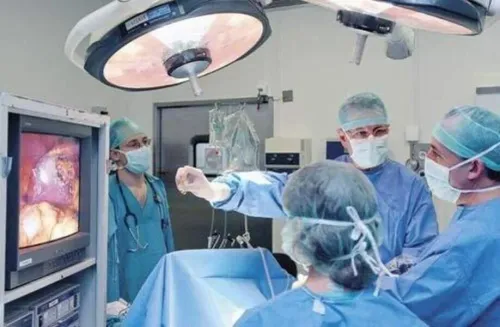
Under general anaesthesia, the surgeon usually makes three small abdominal access points: one for a camera and others for instruments. The appendix is separated, divided and removed; the abdomen is inspected for pus or contamination, then the incisions are closed.
A laparoscopy surgeon in Pune should explain that conversion to an open incision can follow perforation, bleeding, dense adhesions, unexpected anatomy or unsafe identification of the appendix.
Laparoscopy often means smaller incisions and faster recovery than open appendectomy, but it is not guaranteed to be scarless, same-day or free from conversion.
| Recovery situation | What you may expect | Discharge or admission consequence |
|---|---|---|
| Uncomplicated case | Pain controlled, drinking and walking | Discharge after normal temperature and examination findings |
| Perforation or contamination | Intravenous antibiotics and closer observation | Longer admission |
| Abscess or other complication | Additional treatment, including drainage when needed | Discharge waits for clinical stability |
The appendix specimen normally goes for histopathological examination, which can reveal an unexpected tumour or another disease. Before leaving, ask about wound cleaning, showering, lifting limits, driving, work and prescribed medicines.
Contact the surgical team or return to hospital for fever, increasing pain, repeated vomiting, inability to drink, wound drainage, spreading redness or worsening weakness. For an appendix surgery Erandwane appointment, ask who provides after-hours review and what to do if symptoms worsen after discharge.
How to compare a Shivajinagar, Deccan or Erandwane appendix care pathway
Choose the pathway with documented emergency capacity and rapid access, not the locality promising the smallest scar. Shivajinagar, Deccan and Erandwane are map labels, so verify the actual hospital address, emergency admission route and operating availability.
| Pathway | Verify | What it tells you |
|---|---|---|
| Shivajinagar provider | Hospital address, emergency entrance and current operating access | Whether the listing leads to immediate treatment |
| Deccan provider | On-call surgeon, anaesthesia and transfer arrangements | Whether after-hours care stays in one hospital |
| Erandwane provider | Imaging, theatre and critical-care access | Whether complications can be managed without delay |
Ask a laparoscopic surgeon in Deccan, or any laparoscopy surgeon in Pune, these questions:
- Does the surgeon personally perform emergency laparoscopic appendectomies, and who covers cases outside routine hours?
- Does the hospital provide 24-hour anaesthesia, ultrasound or CT, laboratory testing, blood-bank access, operating-room support and critical care?
- How are perforation, abscess, conversion to open surgery and postoperative antibiotics managed? Is pathology examination of the appendix included?
For an appendix surgery Erandwane search, request a written estimate showing surgeon and anaesthesia fees, operating-room charges, pathology, medicines, imaging, consumables and additional admission costs if perforation or conversion prolongs treatment. A low initial quote can become incomplete when complications require intensive monitoring or extra antibiotics.
If considering Dr Nitin Pawar-Best Laparoscopic, Hernia, Laser Piles Surgeon in Pune, ask these same appendix-specific questions and confirm the hospital pathway directly; “laparoscopic” alone does not establish emergency appendix experience. Choose documented capability over a guaranteed same-day discharge.
Frequently asked questions
When should appendix symptoms receive emergency assessment?
Go to an emergency department for severe or rapidly worsening abdominal pain, a rigid or very tender abdomen, repeated vomiting, fainting, confusion or possible sepsis. Do not wait for a routine appointment.
How do doctors confirm appendicitis?
Doctors combine your symptoms and examination with blood and urine tests and imaging. Ultrasound or CT can show an inflamed appendix and complications such as an abscess, perforation or bowel obstruction.
Is laparoscopic appendectomy safest for every patient?
No. The safest treatment depends on the diagnosis, stability, appendix inflammation and complications. Laparoscopic surgery suits many uncomplicated cases, while an abscess, perforation or severe instability can require drainage, antibiotics or open surgery.
What does recovery after laparoscopic appendectomy involve?
Recovery includes pain control, wound care, gradual activity, monitoring for fever or worsening pain and a follow-up review. Your surgeon will give specific instructions based on the operation and any complications.
How can you compare appendix care in Shivajinagar, Deccan and Erandwane?
Compare emergency access, surgeon availability, round-the-clock anaesthesia and imaging, operating-room backup, hospital admission capacity and postoperative follow-up rather than choosing only by neighbourhood.